
Abstract
Online platforms offer forums with rich, real-world illustrations of moral reasoning. Among these, the r/AmITheAsshole (AITA) subreddit has become a prominent resource for computational research. In AITA, a user (author) describes an interpersonal moral scenario, and other users (commenters) provide moral judgments with reasons for who in the scenario is blameworthy. Prior work has focused on predicting moral judgments from AITA posts and comments. This study introduces the concept of moral sparks—key narrative excerpts that commenters highlight as pivotal to their judgments. Thus, sparks represent heightened moral attention, guiding readers to effective rationales.Through 24,676 posts and 175,988 comments, we demonstrate that research in social psychology on moral judgments extends to real-world scenarios. For example, negative traits (rude) amplify moral attention, whereas sympathetic traits (vulnerable) diminish it. Similarly, linguistic features, such as emotionally charged terms (e.g., anger), heighten moral attention, whereas positive or neutral terms (leisure and bio) attenuate it. Moreover, we find that incorporating moral sparks enhances pretrained language models’ performance on predicting moral judgment, achieving gains in F1 scores of up to 5.5%. These results demonstrate that moral sparks, derived directly from AITA narratives, capture key aspects of moral judgment and perform comparably to prior methods that depend on human annotation or large-scale generative modeling.
1 Introduction
Morality is a foundational lens for understanding behavior on social media, shaping how individuals evaluate conflicts, assign blame, and navigate interpersonal dilemmas in digital environments [[[11]]]. Online interactions are often governed by implicit moral frameworks that reflect collective beliefs about right and wrong, fairness, and harm. Prior work has highlighted the need to address harmful behaviors that violate ethical expectations and erode trust in online communities [[[10]]], revealing how different platforms surface divergent value systems [[[11]]], and exhibiting ideological biases, particularly in relation to politicians’ viewpoints [[[21]]]. These studies underscore the importance of moral reasoning in promoting safety and inclusivity online, yet few directly engage with morality as a primary analytical lens.
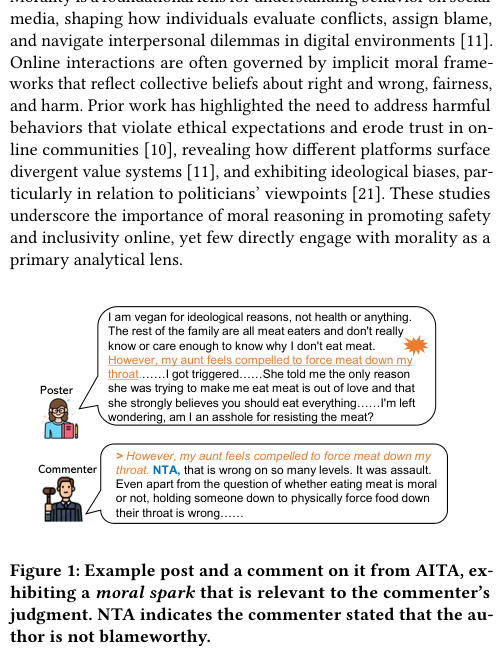
Figure 1: Example post and a comment on it from AITA, exhibiting a moral spark that is relevant to the commenter’s judgment. NTA indicates the commenter stated that the author is not blameworthy.
Recently, a growing body of computational research is exploring the moral dimensions of online platforms, which offer a rich, real-world source of moral dilemmas across diverse contexts [[[11]], [[33]], [[39]], [[51]], [[52]], [[56]]]. Online platforms like r/AmITheAsshole (AITA) provide an ideal environment for computational social research, enabling the study and application of moral reasoning that mirrors human morality. Figure 1 illustrates an example of an AITA post and its corresponding comments. In AITA, users describe interpersonal conflicts and seek judgments on whether they are at fault (YTA) or not (NTA). Commenters provide their verdicts along with reasons for their judgments, sometimes highlighting excerpts. We term these excerpts as moral sparks. Since they indicate moral attention that cuts through extraneous information [[[41]]], which are common in moral narratives. Despite their importance in guiding moral judgments, moral sparks have yet to be systematically studied, this paper fills this gap.
Despite growing interest in AITA, prior research has largely overlooked the moral reasoning mechanisms that underpin user judgments—missing a critical opportunity to interpret online behavior through the lens of ethical theory. For example, Affective Disposition Theory (ADT) [[[59]]] posits that individuals form moral judgments and emotional responses based on a character’s traits and dispositions, aligning positively or negatively depending on perceived moral valence. Recent extensions [[[35]], [[49]]] further suggest that moral judgments are shaped not only by observable actions but also by inferred motivations. Computational studies have shown that these principles are applicable to AITA, with linguistic features like anger serving to amplify perceived blame [[[11]], [[17]], [[56]]]. Moreover, even subtle changes in linguistics may result in differing moral judgments describing the same situation [[[51]]]. Despite these advancements, no research has explored whether moral attention, as reflected by moral sparks, practically mirrors the effects proposed by ADT.
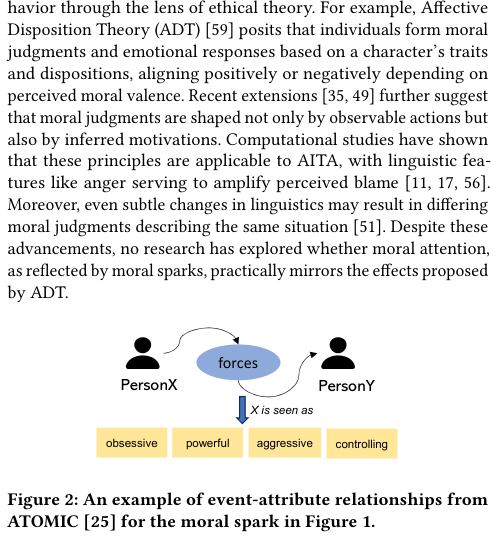
Figure 2: An example of event-attribute relationships from ATOMIC [[[25]]] for the moral spark in Figure 1.
Moreover, social commonsense reasoning subtly shapes the interpretation of character traits by leveraging contextual knowledge, even when such traits are not explicitly stated in the text [[[2]]]. To formalize this, we define a commonsense event (c-event) by integrating ATOMIC, a causal event graph encompassing nine relation types [[[25]]]. Our focus is on the xAttr relation, which captures the perceived attributes of participants (e.g., “PersonX forces” implies that PersonX is controlling, aggressive, or powerful). As illustrated in Figure 2, identifying an event like forces highlights controlling traits, demonstrating how linguistic cues inform a character. These c-events shape readers’ understanding of moral narratives, directing their attention and influencing their judgments.
Previous works have applied normative reasoning to Large Language Models (LLMs) to predict moral judgments [[[22]], [[27]], [[33]]]. However, these models rely on reasoning derived from AITA post titles, extended through generative methods or human annotations [[[14]], [[16]], [[33]], [[57]], [[58]]]. Norms derived solely from titles fail to capture the moral complexity of AITA narratives. For example, the title “AITA for raging at my aunt because she strongly believes I should eat meat”, omits critical details such as repeated boundary violations (illustrated by the moral spark in Figure 1) or a single misunderstanding that could significantly alter the moral conflict. These missing elements are crucial for understanding the situation and the moral judgments it elicits.
Methods. To address these research gaps, we develop a comprehensive methodology to study AITA narratives, focusing on moral sparks. To validate that the quotes function as moral cues and drive moral judgments in comments, we conduct a human evaluation, as outlined in Section 4. We identify verb-driven event triples from moral sparks using the COMPACTIE system [[[15]]]. We then examine how c-events, along with linguistic features like emotions, contribute to the selection of an excerpt as a moral spark through logistic regression analysis. We use transfer learning to determine if incorporating moral sparks improves the performance of moral judgment classification. Finally, we analyze model predictions through rationalization, evaluating whether moral sparks serve as anchors for contextualizing moral judgments.
Findings. We find that Affective Disposition Theory (ADT) [[[59]]] applies to scenarios on social media. For example, negative character traits, such as rude, amplify moral attention, whereas sympathetic traits like vulnerable attenuate it. Linguistic features, framed by Moral Foundation Theory [[[20]]], highlight the impact of emotionally charged terms (e.g., cheating) in increasing moral attention, whereas positive and neutral terms (e.g., leisure and family members) diminish it. Moreover, our experiments with sequential transfer learning [[[10]], [[32]], [[44]]] and soft rationalization [[[26]], [[52]]] show that integrating moral sparks enhances model performance in moral judgment classification. Rationales for these classifications often overlap with the c-events that shape the likelihood of a moral spark’s appearance. For example, the c-event can’t help aligns with rationales like rude and selfish, triggering moral sparks, whereas positive traits such as loyalty and distressed correlate with will always love and would be upset, reducing the likelihood of moral sparks’ appearance. These results underscore how moral sparks anchor situational narratives, shaping and reinforcing moral judgments.
2 Related Work
Affective Disposition Theory (ADT) [[[59]]] explains how character traits influence moral judgment and emotional responses. ADT has been applied to drama [[[59]]], to explore why certain narratives engage audiences. Tamborini et al. [[[49]]] show that ADT’s effectiveness in understanding morally complex characters depends on narrative cues, whereas Matthews and Bonus [[[35]]] find that characters’ behaviors can dynamically shift audience moral judgments.
Social media narrative analysis employs methods like word embeddings, topic modeling [[[40]]], and sentiment analysis [[[51]]]. These narratives are challenges, as authors often act as both narrator and character, subtly shaping perceptions through language [[[45]]]. Linguistic features such as passive voice and power dynamics further influence interpretation [[[56]]]. Lourie et al. [[[33]]] used AITA-derived social norms to predict moral judgments. Statistical analyses of AITA posts reveal moral judgment patterns, including biases related to gender and tone [[[4]], [[11]], [[51]]]. Reasoning-aware hypertext study is crucial for interpreting nuanced opinions, combating misinformation, and promoting ethical AI systems [[[19]], [[54]]]. Social commonsense has been applied to identify event causality in social media, with datasets on moral actions and everyday rules aiding cultural bias detection and improving language model performance [[[2]], [[14]]].
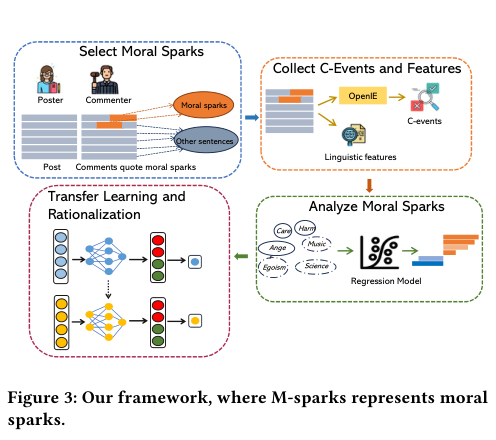
Figure 3: Our framework, where M-sparks represents moral sparks.
3 Data and Methods
This section outlines the data and methods employed in this study. Figure 3 shows our framework. We start from extracting moral sparks from these narratives. Then, we align moral sparks with ATOMIC [[[25]]], label the sparks with two processes, and extract linguistic features for further analysis.
3.1 Collect Moral Sparks
Reddit discussions are structured as trees rooted at an “original” post; comments reply to the root or to other comments. We adopt previous works’ definitions of post and comment [[[18]], [[51]]]. We define instance and moral sparks in light of our research objectives: (1) A post is a starting point in a discussion, (2) A top-level comment is a reply to a post (not to a comment), (3) An instance is a full sentence in a post parsed by the Stanford dependency parser [[[6]]], (4) A moral spark is an instance quoted by comments, and (5) A verdict is a comment’s moral judgments given to a post.
We adopt the dataset from Xi and Singh [[[52]]], which includes both posts and top-level comments, unlike other works [[[11]], [[33]], [[56]]]. The dataset includes only YTA and NTA verdict labels for posts, other AITA verdicts are excluded. It consists of posts with at least 50 words and 10 top-level comments, totaling 351,067 posts and 10.3M comments from June 2013 to November 2021. We use regular expressions ([>nn]) to identify quoted moral sparks from the comments. To align with ATOMIC [[[25]]], which contains verb-driven sentences such as “PersonX gets bullied,” we retain only those instances with event triples, removing instances that lack a subject or predicate (root) in dependency parsing. We improve text quality by removing stop words (using NLTK^1^), emojis, unicode tokens, and punctuation, and by expanding contractions (e.g., can’t to cannot). This process results in a final dataset of 24,676 posts, 483,583 instances, and 175,988 moral sparks, averaging 7.70 moral sparks per post, with a range from 1 to 21.
3.2 Collect C-Events
We collect c-events for the instances through three stages: event extraction, semantic alignment, and blameworthiness labeling.
Extracting event triples:We use COMPACTIE [[[15]]] to extract verb-driven event triples. There triples align with the structure of ATOMIC [[[25]]], capturing key actions and attributes. COMPACTIE generates concise, contextually relevant triples, including both active and passive constructions, outperforming conventional OpenIE systems. For example, it identifies events like John apologizes to Mary or John argues, providing structured representations of interactions and behaviors critical to moral reasoning. To identify the subjects in the triples for further analysis, we prepare Author and Others persona sets, which consist of first-person pronouns (e.g., I, we) and third-person pronouns (e.g., she, they), respectively. Using SpaCy’s dependency parser^2^, we expand these sets with candidate terms (PRON, PROPN, NOUN) and filter nouns using a lexicon of 3,125 people-related terms [[[34]]]. Coreference resolution with Huggingface’s neuralcoref^3^ ensures tokens from coreferent spans are added to the persona sets, enabling precise participant identification and enhancing the contextual relevance of extracted triples.
Aligning extracted triples:We adopt ATOMIC [[[25]]], which offers a causal event graph with nine relation types. Our alignment focuses on the xAttr relation, which captures perceived attributes of participants (e.g., “PersonX forces” implies PersonX is controlling, aggressive, or powerful). Following Bauer et al. [[[2]]], we apply a two-phase filtering process: (1) select ATOMIC candidates by matching common verbs (including passive forms) and ranking them using TF-IDF vectors and cosine similarity (threshold 0.5); and (2) apply BERTScore [[[55]]] to refine rankings, retaining the top three candidates per instance.
Table 1: Labeling moral sparks’ blameworthiness. Label 1 indicates blameworthiness and Label 0 represents the opposite. “Verdict” refers to the quoted moral spark comment’s judgment, where YTA signifies that the Author persona is blamed, and NTA denotes the Others persona is blamed.
Event Type | Subject | Object | Verdict | Label |
|---|---|---|---|---|
Subject-Verb | Author | - | YTA | 1 |
Author | - | NTA | 0 | |
Others | - | YTA | 0 | |
Others | - | NTA | 1 | |
Subject-Verb-object | Others | Author | YTA | 0 |
Others | Author | NTA | 1 | |
Author | Others | YTA | 1 | |
Author | Others | NTA | 0 |
Table 2: Label details for moral sparks identification and their blameworthiness.
Labeling Target | Label 1 | Label 0 | Total |
|---|---|---|---|
Moral Sparks | 175,988 | 307,595 | 483,583 |
Blameworthiness | 57,168 | 118,802 | 175,988 |
3.3 Label Moral Sparks
This paper employs two labeling targets: one to identify whether an instance constitutes a moral spark and another to determine whether the identified moral spark indicates blameworthiness. For moral spark identification, instances are labeled as 1 if they are moral sparks and 0 otherwise. Moral sparks are further labeled based on event triples, as described in the “Extracting event triples” step, and the comment’s verdict that references the moral spark. Table 1 outlines our blameworthiness labeling process, dividing events into two categories: (1) subject-verb events (e.g., John argues or Bob is angry) and (2) subject-verb-object events (e.g., John apologizes to Mary). Blameworthiness is defined based on the comment’s verdict quoting the moral spark. Table 2 provides statistics of the results from the two labeling targets.
We acknowledge a limitation: whereas NTA indicates that the author is not blameworthy, it does not preclude blame being assigned elsewhere in the narrative. Conversely, a YTA verdict signifies that the author is blameworthy but does not imply that others are free from blame. This labeling approach builds on prior work investigating blameworthiness in relation to the Author and Others [[[17]], [[51]]] and acknowledges that AITA users often interpret NTA as synonymous with NAH.^4^
3.4 Extract Linguistic Features
Linguistic signals drawn from cognitive science capture nuanced information in AITA moral narratives [[[51]], [[56]]]. Building on Xi and Singh [[[51]]] and Giorgi et al. [[[17]]], we construct a feature vector for each instance, integrating Post (context-level) and Cha (character-level) features, described in detail below:
Post: Moral Content (MFT)Moral Foundation Theory (MFT) [[[20]]], a widely used in analysis on Reddit [[[39]], [[51]]], proposes that human moral reasoning is based on five core foundations: care/harm, fairness/cheating, loyalty/betrayal, authority/subversion, and sanctity/degradation. We use the extended Moral Foundations Dictionary (eMFD) [[[23]]], containing 2,041 words across five MFT domains, each with a composite valence score [ − 1, 1].
Post: NRC VADValence, Arousal, and Dominance (VAD) scores [[[37]]] is a lexicon of 20,000 words scored in [0, 1] that captures affective tone in text.
Post: NRC EmotionUsing Mohammad and Turney’s ([[38]]) NRC Emotion lexicon, we represent 10,170 words with eight basic emotions from the emotion model of: anger, fear, anticipation, trust, surprise, sadness, joy, and disgust [[[43]]], yielding an eight-dimensional vector for each instance.
Post: LIWCLIWC [[[42]]] organizes words into social and psychological categories (e.g., Lifestyle). We use the expanded LIWC-22 dictionary [[[5]]] to vectorize word counts per instance, previously applied to measure real-life moral scenarios [[[51]]].
Post: SubjectivitySubjectivity scores are computed per post from a lexicon with values based on word strength and polarity: 0.5 for weaksubj and 1 for strongsubj, adjusted by polarity [[[50]]].
Post: SentimentVADER [[[24]]] determines nominal sentiment per instance: negative (below − 0.05), positive (above 0.05), or neutral (in between).
Cha: Connotation FramesWe adopt 1,000 common verbs from a lexicon includes four connotative dimensions [ − 1, 1] for subject and object: effects, values, mental states, and authors’ perspectives [[[45]]].
Cha: Power and AgencyThe power and agency dataset [[[47]]] extends connotation frames, assigning implicit power and agency levels to 1,737 power verbs and 2,146 agency verbs. The lexicon delineates power dynamics; for instance, in “X fears Y,”, Y holds power, whereas in “X pushes Y,”, X wields power. The author’s power score increases when they are the subject in a power shift from subject to object, and reduces if they are the object. Agency scores are computed similarly. Characters with power or agency over others are marked 1, and others are marked 0.
Although some lexicons, such as MFT [[[23]]], provide scores for individual words, we follow prior work [[[51]]] by counting the occurrences of lexicon terms normalized by the number of extracted event triples. Scores are inverted when negative edges (e.g., "not") are present in the dependency structure. For Post:sentiment, we compute the average of compound sentiment scores. The persona sets used to collect Cha features align with those detailed in Section 3.2. Cha scores are normalized based on the number of descriptive words (e.g., ADJ, ADV) associated with characters (i.e., Author and Others persona sets) in the dependency tree.
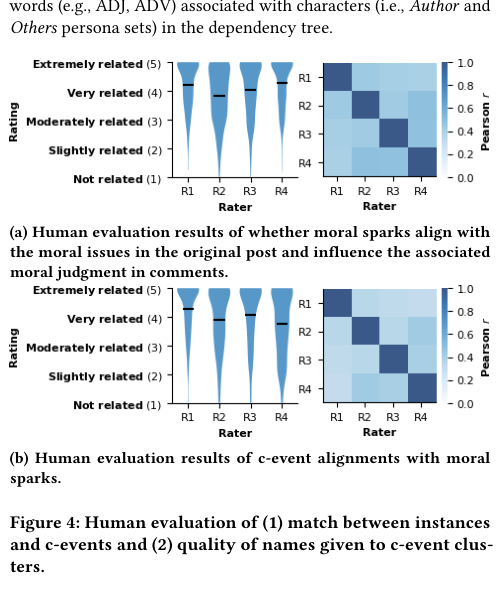
Figure 4: Human evaluation of (1) match between instances and c-events and (2) quality of names given to c-event clusters.
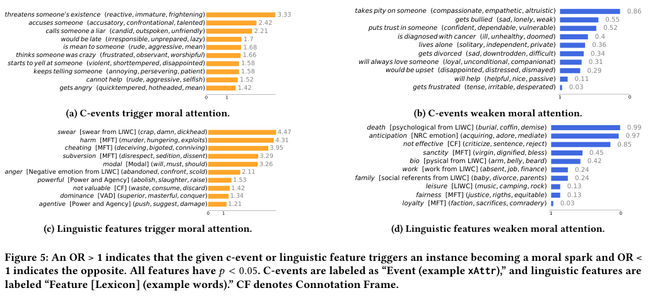
Figure 5: An OR > 1 indicates that the given c-event or linguistic feature triggers an instance becoming a moral spark and OR < 1 indicates the opposite. All features have p < 0.05. C-events are labeled as “Event (example xAttr),” and linguistic features are labeled “Feature [Lexicon] (example words).” CF denotes Connotation Frame.
4 Human Evaluation
We designed two surveys to evaluate (1) whether moral sparks function as moral cues and drive moral judgments in comments, and (2) whether each instance and its matched c-events make sense to people. We randomly selected 300 instances with their candidates and asked four independent raters (referred to as R1, R2, R3, and R4) to provide ratings on a five-point Likert scale. The survey questions for Survey 1 is: How likely is a moral spark is related to triggering the commenter’s moral judgment about the post? The survey question for Survey 2 is: How closely does a c-event describe what happened in an instance? Both surveys require raters to provide a rating from 1 to 5, with 1 being not related and 5 being extremely related.
Figure 4a presents the survey results. The violin plots illustrate the rating distributions provided by the four raters for each survey. For Survey 1, the average rating is above “strongly related” (μ = 4.16), with R1 providing the highest average rating (μ = 4.35) and R3 providing the lowest (μ = 3.89). The heatmap displays the inter-rater agreements of moderate general agreement among the raters (r = 0.535). For Survey 2, the ratings similarly averaged above “strongly related” (μ = 4.18), with moderate agreement between the ratings (r = 0.516). Collectively, these results support the validity of our methodology for extracting and aligning moral sparks and its function on driving comments to give judgments, and social media data with commonsense knowledge, as perceived by human evaluators.
5 Factors Shaping Moral Attention
We employ a logistic regression model to analyze the relationship between features (i.e., commonsense and linguistic features) that trigger or attenuate moral attention, specifically in determining whether an instance qualifies as a moral spark. We recognize that even subtle changes in linguistics may result in differing moral judgments of the same situation [[[51]]]. However, investigating the effects on individuals is beyond the scope of this study and will be addressed in future work. Though logistic regression can capture associations between features and tasks [[[11]], [[28]], [[36]]], it suffers from some limitations. In particular, features such as social commonsense may introduce multicollinearity, potentially distorting regression estimates and complicating the interpretability of results. Additionally, logistic regression assumes a linear relationship between features and log odds, overlooking nonlinear dynamics and hierarchical relationships, which could affect accuracy. Despite these challenges, we proceed with this method due to its established success. The model is defined as:$(1)(begin{equation}log frac{P(Y=1)}{1-P(Y=1)} = beta 0 + beta X X + sum {i=1}^{n}alpha i Diend{equation})$ where X represents the feature values, D~i~ indicates the presence of a specific feature (e.g., c-event or linguistic), and Y is the binary label of whether an instance is a moral spark. β~X~ represents the regression coefficient, and exp (β~X~) is the odds ratio (OR), interpreting the change in odds for a one-unit increase in X. To ensure reliability, we apply a False Discovery Rate (FDR) correction [[[3]]] and test whether the p-value for β~X~ is below 0.05.
Figure 5a and Figure 5b show that certain c-events, such as “threatens someone’s existence” (OR = 3.33), strongly correlate with moral attention, suggesting that aggressive or harmful actions are more likely to get a reader’s focus. Conversely, c-events associated with positive character traits, such as “will always love someone” (OR = 0.31), are less likely to trigger moral attention. Notably, the xAttr attribute of c-events shows similar effects to linguistic features, with attributes like loyal reducing moral attention, paralleling the influence of “loyalty” observed in the MFT framework [[[20]]].
Moreover, Figure 5c and Figure 5d illustrate that linguistic features tied to negative emotions and MFT—like abandoned (under anger)—as amplifiers of moral attention. However, concrete and positive terms (e.g., “bio” and “leisure”) weaken moral attention generally. A comparison with previous findings [[[51]]] reveals consistent patterns: linguistic triggers like anger, dominance, and agentive actions amplify perceptions of blameworthiness, whereas positive attributes such as loyalty weaken these effects in both moral attention and judgments. However, we observe discrepancies with other features, such as anticipation, which show divergent effects across moral attention and moral judgments. These findings highlight the complex interplay between linguistic features and moral judgments in real-world applications.
6 Relationships between Moral Sparks and Moral Judgments
We conduct transfer learning experiments to investigate the correlation between moral sparks and moral judgments. Unlike previous work that generates social norms through human-intensive annotation or generative LLMs [[[14]], [[16]], [[33]], [[57]], [[58]], [[58]]], we use moral sparks normative reasoning. Moreover, we perform rationalization proxies for examining the reasons behind a model’s decision after learning from moral sparks when classifying moral judgments. Transfer learning enables assessing whether moral sparks contribute to aligning model predictions with human-like reasoning, whereas rationalization provides insights into their contributions to moral judgments.
6.1 Transfer Learning
We employ a sequential knowledge transfer approach [[[44]]] to evaluate whether moral sparks incorporate normative reasoning that leads to moral judgments. This method leverages contextual patterns encoded in commonsense reasoning to enhance models’ performance by transferring knowledge across reasoning tasks [[[10]], [[32]], [[57]]]. To do so, we adapt the learned weights from moral spark blameworthiness classification and finetune them for moral judgment classification.
Models. We compare seven models:
BERT [[[12]]]is a transformer-based model pretrained on large corpora using a masked language modeling task, where random words in a sentence are replaced, and the model is tasked with predicting them.
RoBERTa [[[31]]]is a robustly optimized version of BERT, pretrained on more data and using dynamic masking, which improves performance on downstream tasks like text classification and question answering.
XLNet [[[53]]]enhances BERT by combining autoregressive modeling with bidirectional context and using a permutation-based training objective, allowing for flexible token order dependencies and superior performance on tasks such as text classification and question answering.
ELECTRA [[[9]]]employs a more sample-efficient pretraining method called replaced token detection, where the model learns to distinguish between real and fake tokens in corrupted sentences, resulting in faster convergence and better performance.
DistilBERT [[[46]]]is a smaller, faster, and lighter version of BERT, created through knowledge distillation, where a smaller student model learns to mimic the behavior of the larger teacher model.
Flan-T5 [[[8]]]is an extension of the T5 model finetuned on instruction-based datasets to enhance its performance across a range of tasks, leveraging the Text-to-Text Transfer learning framework.
ALBERT [[29]] reduces BERT’s size by sharing parameters across layers and factorizing the embedding matrix, improving efficiency while maintaining model scalability.
Table 3: Training and target datasets. The MS-Norm instances are randomly selected from blameworthiness-labeled moral sparks, as detailed in Table 2.
Type | Dataset | Label 1 (%) | Label 0 (%) | Total |
|---|---|---|---|---|
Training | NormBank | 61.7 | 38.3 | 155,423 |
MS-Norm | 61.7 | 38.3 | 155,423 | |
Target | Anecdotes | 25.7 | 74.3 | 24,573 |
Dilemmas | 48.8 | 51.2 | 23,596 | |
MS-Target | 36.7 | 63.3 | 10,224 |
Training Data. The training dataset, MS-Norm, containing 155,423 moral sparks extracted from 14,452 posts, as summarized in Table 3. MS-Norm is labeled considering blameworthiness as detailed in Section 3.3, with the number of moral sparks scaled to match NormBank [[[57]]], a dataset of 155,423 situational social norms developed using models and refined by human annotators. NormBank norms are structured into four components (setting, behavior, norm, and constraints) and formatted as: “It is [norm] to [behavior] in [setting] when all of the following are true: [constraints],” such as “It is UNEXPECTED to talk about sex at a cafe when all of the following are true: PERSON’s role is barista.” Because NormBank includes three labels (expected, okay, and unexpected), we combine okay and expected into a single category to align with the binary labeling scheme of MS-Norm.
Target Data. Besides our dataset, MS-Target, which comprises the remaining 10,224 posts out of 24,676 excluded from MS-Norm, we conduct sequential transfer learning on two additional datasets: Anecdotes and Dilemmas from the SCRUPLES benchmark [[[33]]]. Anecdotes consists of full posts scraped from AITA and Dilemmas includes one-line summaries of Anecdotes titles, such as “wanting to continue a friendship with someone my boyfriend doesn’t like.” Blameworthiness labels for the MS-Target and Anecdotes datasets are derived from the most upvoted comment in each post, with YTA (1) indicating blameworthy and NTA (0) indicating not blameworthy, as described in the original works [[[33]], [[52]]]. Labels for Dilemmas are derived from human annotations, where “1” indicating blameworthy and “0” indicating not blameworthy. As shown in Table 3, both MS-Target and Anecdotes are heavily imbalanced, with a predominance of label 0, potentially impairing model performance. To attenuate this imbalance, we apply a weighted loss function during training, increasing the weight of label 0 to balance the loss computation.
Table 4: F1 scores of MS-Norm classification (moral spark identification). The best performances are shown in bold.
Model | Not Blameworthy | Blameworthy |
|---|---|---|
RoBERTa | 0.593 | 0.644 |
BERT | 0.612 | 0.634 |
XLNet | 0.580 | 0.656 |
ELECTRA | 0.594 | 0.639 |
DistilBERT | 0.648 | 0.612 |
Flan-T5 | 0.598 | 0.624 |
ALBERT | 0.631 | 0.654 |
Table 5: F1 scores for different models across datasets on blameworthiness prediction. ♣ represents Single and ♦ represents Aggregate. The Base rows show performance without transfer learning. The best performance for each model and dataset is bolded, with improvements over the base performance.
Dataset | Type | Method | RoBERTa | BERT | XLNet | ELECTRA | DistilBERT | Flan-T5 | ALBERT |
|---|---|---|---|---|---|---|---|---|---|
Anecdotes | Base | 0.591 | 0.582 | 0.573 | 0.579 | 0.564 | 0.592 | 0.601 | |
MS-Norm | ♣ | 0.601~↑0.010~ | 0.586~↑0.004~ | 0.580~↑0.007~ | 0.583~↑0.004~ | 0.569~↑0.005~ | 0.604~↑0.012~ | 0.608~↑0.007~ | |
♦ | 0.596~↑0.005~ | 0.590~↑0.008~ | 0.583~↑0.010~ | 0.590~↑0.011~ | 0.582~↑0.018~ | 0.603~↑0.011~ | 0.612~↑0.011~ | ||
NormBank | 0.593~↑0.002~ | 0.604~↑0.022~ | 0.585~↑0.012~ | 0.594~↑0.015~ | 0.578~↑0.014~ | 0.608~↑0.016~ | 0.613~↑0.012~ | ||
Dilemmas | Base | 0.621 | 0.614 | 0.602 | 0.611 | 0.593 | 0.624 | 0.634 | |
MS-Norm | ♣ | 0.658~↑0.037~ | 0.617~↑0.003~ | 0.607~↑0.005~ | 0.619~↑0.008~ | 0.600~↑0.007~ | 0.631~↑0.007~ | 0.640~↑0.006~ | |
♦ | 0.629~↑0.008~ | 0.620~↑0.050~ | 0.652~↑0.050~ | 0.622~↑0.011~ | 0.607~↑0.014~ | 0.636~↑0.012~ | 0.674~↑0.040~ | ||
NormBank | 0.667~↑0.046~ | 0.636~↑0.022~ | 0.609~↑0.007~ | 0.618~↑0.007~ | 0.615~↑0.022~ | 0.634~↑0.010~ | 0.662~↑0.028~ | ||
MS-Target | Base | 0.582 | 0.573 | 0.561 | 0.572 | 0.557 | 0.584 | 0.592 | |
MS-Norm | ♣ | 0.602~↑0.020~ | 0.589~↑0.016~ | 0.616~↑0.055~ | 0.578~↑0.006~ | 0.563~↑0.006~ | 0.594~↑0.010~ | 0.599~↑0.007~ | |
♦ | 0.637~↑0.050~ | 0.608~↑0.030~ | 0.616~↑0.055~ | 0.594~↑0.022~ | 0.565~↑0.008~ | 0.591~↑0.007~ | 0.604~↑0.012~ | ||
NormBank | 0.635~↑0.053~ | 0.606~↑0.033~ | 0.609~↑0.007~ | 0.580~↑0.008~ | 0.584~↑0.027~ | 0.594~↑0.010~ | 0.606~↑0.014~ |
Experiments setup. Each model used for both moral spark and moral judgment identification tasks was finetuned for 10 epochs with a learning rate of 2 × 10^− 5^, a batch size of 16, and a dropout rate of 0.1. For moral spark identification, the models were trained using an 80/10/10 training-validation-test split. We employ the smallest models available for each model from HuggingFace. AdamW with a weight decay of 0.01 as the optimizer, and adapt gradient clipping with a maximum norm of 1 to prevent exploding. All experiments are conducted via HuggingFace. We experiment with two methods for training on MS-Norm: Single (♣ as shown in Table 5), where each moral spark is treated as an independent input, and Aggregate (♣ ♣ as shown in Table 5), where all moral sparks within a post are combined into a single input to provide richer contextual information.
Results. Table 4 presents the performance of MS-Norm classification and Table 5 highlights the impact of integrating MS-Norms and NormBank on model performance across datasets. We summarize our experimental results and discuss the findings here:
Moral sparks as competitive proxies as norms:For MS-Norm identification, DistilBERT excels in label 0 (0.648) classifications. XLNet leads in label 1 (0.656) but has a lower overall performance (0.618). This results in a comparable performance to NormBank [[[57]]]. For moral judgment classification, Aggregate and NormBank outperform Single, demonstrating the benefits of integrating aggregated moral context and external normative information for moral reasoning. NormBank’s strong performance on Anecdotes (+0.022) highlights the value of its clean, structured data. Moreover, MS-Norm Aggregate outperforms NormBank on Dilemmas and MS-Target across four models, highlighting its superior performance in these tasks. While MS-Norm’s classification performance falls short of NormBank’s curated quality (as detailed in [[[57]]]), it offers a practical, less labor-intensive alternative by leveraging naturally extracted norms from AITA posts.
Impact of data:The differing formats and emphases of MS-Norm, NormBank, and the three target datasets lead to varied performance outcomes, highlighting the subtle nature of moral judgment in real-world scenarios. In Anecdotes, Aggregate improves DistilBERT and Flan-T5 by 0.018 and 0.016, respectively, whereas Single achieves the most gains with RoBERTa improving by 0.010. For Dilemmas, Aggregate significantly boosts XLNet (+0.050) and ALBERT (+0.040), whereas NormBank achieves the highest gains for RoBERTa (+0.046), BERT (+0.022), and DistilBERT (+0.022). In MS-Target, Aggregate and NormBank deliver substantial improvements, with DistilBERT gaining 0.055 and ELECTRA up to 0.022, whereas Single and Aggregate peaks at 0.010 for Flan-T5. Consistent with previous findings [[[57]]], Dilemmas show greater improvements than Anecdotes, likely due to their simpler structure. Meanwhile, Anecdotes and MS-Target struggle with the complex writing styles found on social media, further underscoring the challenges of modeling nuanced social norms.
6.2 Rationalization for Identifying Moral Judgments
We employ a rationalization process [[[1]], [[13]], [[30]]] to identify the key factors influencing moral judgment verdicts. Rationales are concise, sufficient segments of the input text that highlight the most critical information influencing the model’s decision [[[26]]]. Given a pretrained model $(mathcal {M})$, each instance is represented as (x, y), where x = [x^i^] denotes the input tokens and y ∈ 0, 1 denotes the binary label (e.g., blameworthy or not). The rationalization process outputs a predicted label $(hat{y})$ and a binary mask z = [z^i^] ∈ 0, 1, where z^i^ = 1 indicates that the i-th token is used in the decision. The tokens identified by this mask are the rationales used to explain the model’s prediction.
Table 6: Metrics for evaluating rationales, as described by Chrysostomou and Aletras [[[7]]]. Each ranges from 0 to 1, with higher values indicating greater importance of the rationales.
Metric | Description | Value |
|---|---|---|
Macro-F1 Drops | Loss in F1 for predicting with rationale-reduced input compared to full input | 0.576 |
Normalized Sufficiency (NS) | Reversed and normacen predicting full text and rationales | 0.539 |
Normalized Comprehensiveness (NC) | Normalized prediction differences between full text and rationale-reduced text | 0.681 |
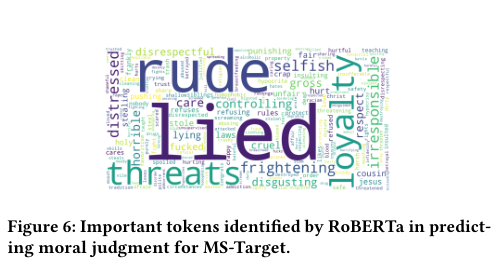
Figure 6: Important tokens identified by RoBERTa in predicting moral judgment for MS-Target.
We employ soft selection [[[26]]], where is well-suited for scenarios without ground-truth rationales and avoids the limitations of hard selection [[[13]]]. We calculate importance scores z through attention weights multiplied by gradients [[[48]]]. We collect rationales from the best-performing model for MS-Target (as shown in the penultimate row of Table 5), the RoBERTa model with Aggregate. To evaluate whether these rationales effectively capture the contextual information most relevant to the model’s predictions, we compute the metrics detailed in Table 6. The results confirm that the extracted rationales are of moderate to high quality [[[7]]], indicating their reliability.
Figure 6 illustrates the identified rationales. A notable overlap exists between the rationales and c-events, including their XAttr, which collectively shape moral attention, as illustrated in Figure 5. For instance, the c-event “can’t help” aligns with rationales such as “rude” and “selfish,” whereas “calling someone a liar” corresponds to “lied,” and “threatening someone’s existence” aligns with “threats.” Positive attributes also exhibit alignment, such as “loyalty” correlating with “will always love” and “distressed” matching “would be upset.” These alignments underscore the importance of moral sparks in anchoring the reasoning for moral judgments by directing the reader’s attention through narrative cues.
7 Discussion
Our research studies how language models benefit from modeling moral reasoning by analyzing real-world data from the subreddit r/AmITheAsshole (AITA). We investigate the identification of and the ways in which models leverage them to enhance understanding of moral decision-making. This work underscores the importance of moral sparks in shaping moral judgments and contributes to computational social research on understanding human values on social media.
7.1 Findings
We extend Affective Disposition Theory (ADT) [[[59]]] to address the complexities of everyday moral reasoning. We identify that negative character traits, like rude, amplify moral attention, whereas sympathetic traits, like sad, diminish it. This reinforces ADT’s psychological insights, showing that character traits drive moral judgments [[[35]], [[49]]].
Additionally, linguistic features from Moral Foundation Theory (MFT) [[[20]]], such as cheating (amplifying blame) and sanctity (mitigating blame), shape moral attention. Emotional words like anger heighten attention, whereas concrete and positive terms (e.g., bio) reduce it [[[38]]]. These results align with prior computational social science research [[[47]], [[51]]], emphasizing the connection between cognitive effects and moral values.
Finally, our sequential transfer learning experiments show that incorporating insights from moral sparks improves pretrained language models’ ability to predict moral judgments. Rationales for these classifications often match the c-events that shape the likelihood of a moral spark’s appearance. For example, rude serves as both a rationale and the xAttr of the c-event “is mean to someone,” triggering the moral spark. These results underscore the critical role of moral sparks in understanding complex moral situations.
7.2 Limitations and Threats to Validity
As with all social media research, our study has inherent limitations.
Analysis. Our focus on AITA posts limits generalizability to other platforms. Human evaluations showed consistency but were constrained by small sample size and randomized sentence order, affecting insight into narrative flow. While we validated the alignment of c-events with moral sparks, automatic generation of (subject, predicate, object) triples requires further validation. Limiting analysis to the best-aligned c-event per instance may omit relevant information.
Methodology. Though effective, logistic regression could be improved with regularization or dimensionality reduction to address multicollinearity. More complex models like neural networks might better capture feature interactions. As an observational study, we cannot infer causality due to possible confounders such as representation bias. Cultural, gender, and socioeconomic factors likely influence judgments, suggesting a need for cross-cultural studies and broader analyses of first-person narratives. Hierarchical and causal models could offer deeper insights.
Labeling. C-event labels rely on AITA verdicts and author roles, possibly oversimplifying nuanced or shared blame. Post-level labels based on top comments, while aligned with prior work, may miss subtleties such as NAH (no assholes here) cases. These choices reflect standard practices but underscore the complexity of modeling moral judgment.
Acknowledgments
We thank the anonymous reviewers for their helpful comments. We thank the NSF (grant IIS-2116751) for partial support for this research.
References
[1]. Jasmijn Bastings, Wilker Aziz, and Ivan Titov. 2019. Interpretable Neural Predictions with Differentiable Binary Variables. In Proceedings of the Annual Meeting of the Association for Computational Linguistics. Association for Computational Linguistics, Florence, Italy, 2963–2977. doi:10.18653/v1/P19-1284
[2]. Lisa Bauer, Hanna Tischer, and Mohit Bansal. 2023. Social Commonsense for Explanation and Cultural Bias Discovery. In Proceedings of the Conference of the European Chapter of the Association for Computational Linguistics. Association for Computational Linguistics, Dubrovnik, Croatia, 3727–3742. doi:10.18653/v1/2023.eacl-main.271
[3]. Yoav Benjamini and Yosef Hochberg. 1995. Controlling the False Discovery Rate: A Practical and Powerful Approach to Multiple Testing. Journal of the Royal Statistical Society: Series B (Methodological) 57, 1 (1995), 289–300. doi:10.2307/2346101
[4]. Nicholas Botzer, Shawn Gu, and Tim Weninger. 2022. Analysis of Moral Judgment on Reddit. IEEE Transactions on Computational Social Systems 10, 3 (2022), 947–957. doi:10.1109/TCSS.2022.3160677
[5]. Ryan L Boyd, Ashwini Ashokkumar, Sarah Seraj, and James W Pennebaker. 2022. The Development and Psychometric Properties of LIWC-22. Austin, TX: University of Texas at Austin 10 (2022), 1–47.
[6]. Danqi Chen and Christopher Manning. 2014. A Fast and Accurate Dependency Parser using Neural Networks. In Proceedings of the Conference on Empirical Methods in Natural Language Processing (EMNLP). Association for Computational Linguistics, Doha, Qatar, 740–750. doi:10.3115/v1/D14-1082
[7]. George Chrysostomou and Nikolaos Aletras. 2022. Flexible Instance-Specific Rationalization of NLP Models. In Proceedings of the AAAI Conference on Artificial Intelligence. AAAI Press, Online, 10545–10553. doi:10.1609/aaai.v36i10.21298
[8]. Hyung Won Chung, Le Hou, Shayne Longpre, Barret Zoph, Yi Tay, William Fedus, Yunxuan Li, Xuezhi Wang, Mostafa Dehghani, Siddhartha Brahma, et al. 2024. Scaling Instruction-Finetuned Language Models. Journal of Machine Learning Research 25, 70 (2024), 1–53. doi:10.1609/aaai.v36i10.21298
[9]. Kevin Clark, Minh-Thang Luong, Quoc V. Le, and Christopher D. Manning. 2020. ELECTRA: Pre-training Text Encoders as Discriminators Rather Than Generators. In Proceedings of the International Conference on Learning Representations (ICLR). ICLR, Online. doi:10.48550/arXiv.2003.10555
[10]. Mithun Das and Animesh Mukherjee. 2023. Transfer Learning for Multilingual Abusive Meme Detection. In Proceedings of the ACM Web Science Conference (Austin, TX, USA). Association for Computing Machinery, New York, NY, USA, 245–250. doi:10.1145/3578503.3583607
[11]. Sara De Candia, Gianmarco De Francisci Morales, Corrado Monti, and Francesco Bonchi. 2022. Social Norms on Reddit: A Demographic Analysis. In Proceedings of the ACM Web Science Conference (Barcelona, Spain) (WebSci). Association for Computing Machinery, NY, 139–147. doi:10.1145/3501247.3531549
[12]. Jacob Devlin, Ming-Wei Chang, Kenton Lee, and Kristina Toutanova. 2019. BERT: Pre-training of Deep Bidirectional Transformers for Language Understanding. In Proceedings of the Conference of the North American Chapter of the Association for Computational Linguistics. Association for Computational Linguistics, Minneapolis, 4171–4186. doi:10.18653/v1/N19-1423
[13]. Jay DeYoung, Sarthak Jain, Nazneen Fatema Rajani, Eric Lehman, Caiming Xiong, Richard Socher, and Byron C. Wallace. 2020. ERASER: A Benchmark to Evaluate Rationalized NLP Models. In Proceedings of the Annual Meeting of the Association for Computational Linguistics (ACL). Association for Computational Linguistics, Online, 4443–4458. doi:10.18653/v1/2020.acl-main.409
[14]. Denis Emelin, Ronan Le Bras, Jena D. Hwang, Maxwell Forbes, and Yejin Choi. 2021. Moral Stories: Situated Reasoning about Norms, Intents, Actions, and their Consequences. In Proceedings of the Conference on Empirical Methods in Natural Language Processing (EMNLP). Association for Computational Linguistics, Online and Punta Cana, 698–718. doi:10.18653/v1/2021.emnlp-main.54
[15]. Farima Fatahi Bayat, Nikita Bhutani, and H. Jagadish. 2022. CompactIE: Compact Facts in Open Information Extraction. In Proceedings of the Conference of the North American Chapter of the Association for Computational Linguistics : Human Language Technologies. Association for Computational Linguistics, Seattle, 900–910. doi:10.18653/v1/2022.naacl-main.65
[16]. Maxwell Forbes, Jena D. Hwang, Vered Shwartz, Maarten Sap, and Yejin Choi. 2020. Social Chemistry 101: Learning to Reason about Social and Moral Norms. In Proceedings of the Conference on Empirical Methods in Natural Language Processing (EMNLP). Association for Computational Linguistics, Online, 653–670. doi:10.18653/v1/2020.emnlp-main.48
[17]. Salvatore Giorgi, Ke Zhao, Alexander H Feng, and Lara J Martin. 2023. Author as Character and Narrator: Deconstructing Personal Narratives from the r/AmitheAsshole Reddit Community. In Proceedings of the International AAAI Conference on Web and Social Media , Vol. 17. AAAI Press, NY, USA, 233–244. doi:10.1609/icwsm.v17i1.22141
[18]. Anna Guimaraes and Gerhard Weikum. 2021. X-Posts Explained: Analyzing and Predicting Controversial Contributions in Thematically Diverse Reddit Forums.. In Proceedings of the International AAAI Conference on Web and Social Media (ICWSM). AAAI Press, online, 163–172. doi:10.1609/icwsm.v15i1.18050
[19]. Zhen Guo, Zhe Zhang, and Munindar P. Singh. 2020. In Opinion Holders’ Shoes: Modeling Cumulative Influence for View Change in Online Argumentation. In Proceedings of the 29th Web Conference (WWW). ACM, Taipei, 2388–2399. doi:10.1145/3366423.3380302
[20]. Jonathan Haidt and Jesse Graham. 2007. When Morality Opposes Justice: Conservatives have Moral Intuitions that Liberals May Not Recognize. In Social Justice Research. Vol. 20. Springer, Heidelberg, Germany, 98–116. doi:10.1007/s11211-007-0034-z
[21]. Amanul Haque and Munindar P. Singh. 2024. NewsSlant: Analyzing Political News and Its Influence Through a Moral Lens. IEEE Transactions on Computational Social Systems (2024), 1–9. doi:10.1109/TCSS.2023.3341910
[22]. Dan Hendrycks, Collin Burns, Steven Basart, Andrew Critch, Jerry Li, Dawn Song, and Jacob Steinhardt. 2020. Aligning AI with shared human values. arXiv preprint arXiv:https://arXiv.org/abs/2008.02275 (2020).
[23]. Frederic R. Hopp, Jacob T Fisher, Devin Cornell, Richard Huskey, and René Weber. 2020. The Extended Moral Foundations Dictionary (eMFD): Development and Applications of a Crowd-Sourced Approach to Extracting Moral Intuitions from Text. Behavior Research Methods 53 (2020), 232–246. doi:10.3758/s13428-020-01433-0
[24]. Clayton J. Hutto and Eric Gilbert. 2014. VADER: A Parsimonious Rule-Based Model for Sentiment Analysis of Social Media Text. In Proceedings of the International AAAI Conference on Weblogs and Social Media (ICWSM). AAAI Press, Ann Arbor, 216–225. doi:10.1609/icwsm.v8i1.14550
[25]. Jena D Hwang, Chandra Bhagavatula, Ronan Le Bras, Jeff Da, Keisuke Sakaguchi, Antoine Bosselut, and Yejin Choi. 2021. (Comet-)Atomic 2020: On symbolic and neural commonsense knowledge graphs. In Proceedings of the AAAI Conference on Artificial Intelligence. AAAI Press, Vancouver, Canada, 6384–6392. doi:10.1609/aaai.v35i7.16792
[26]. Sarthak Jain, Sarah Wiegreffe, Yuval Pinter, and Byron C. Wallace. 2020. Learning to Faithfully Rationalize by Construction. In Proceedings of the Annual Meeting of the Association for Computational Linguistics (ACL). Association for Computational Linguistics, Online, 4459–4473. doi:10.18653/v1/2020.acl-main.409
[27]. Liwei Jiang, Jena D Hwang, Chandra Bhagavatula, Ronan Le Bras, Maxwell Forbes, Jon Borchardt, Jenny Liang, Oren Etzioni, Maarten Sap, and Yejin Choi. 2021. Delphi: Towards Machine Ethics and Norms. arXiv 2110.07574 (2021), 1–72. doi:10.48550/arXiv.2110.07574
[28]. Yohan Jo, Seojin Bang, Emaad Manzoor, Eduard Hovy, and Chris Reed. 2020. Detecting Attackable Sentences in Arguments. In Proceedings of the Conference on Empirical Methods in Natural Language Processing (EMNLP). Association for Computational Linguistics, Online, 1–23. doi:10.18653/v1/2020.emnlp-main.1
[29]. Zhenzhong Lan, Mingda Chen, Sebastian Goodman, Kevin Gimpel, Piyush Sharma, and Radu Soricut. 2019. ALBERT: A Lite BERT for Self-Supervised Learning of Language Representations. arXiv preprint arXiv:https://arXiv.org/abs/1909.11942 1909.11942 (2019). doi:10.48550/arXiv.1909.11942
[30]. Tao Lei, Regina Barzilay, and Tommi Jaakkola. 2016. Rationalizing Neural Predictions. In Proceedings of the Conference on Empirical Methods in Natural Language Processing (EMNLP). Association for Computational Linguistics, Austin, Texas, 107–117. doi:10.18653/v1/D16-1011
[31]. Yinhan Liu, Myle Ott, Naman Goyal, Jingfei Du, Mandar Joshi, Danqi Chen, Omer Levy, Mike Lewis, Luke Zettlemoyer, and Veselin Stoyanov. 2019. RoBERTa: A Robustly Optimized BERT Pretraining Approach. arXiv (July 2019), 1218–1227. doi:10.48550/arXiv.1907.11692
[32]. Nicholas Lourie, Ronan Le Bras, Chandra Bhagavatula, and Yejin Choi. 2021. UNICORN on RAINBOW: A Universal Commonsense Reasoning Model on a New Multitask Benchmark. In Proceedings of the National Conference on Artificial Intelligence , Vol. 35. Association for the Advancement of Artificial Intelligence (AAAI), Online, 13480–13488. doi:10.1609/aaai.v35i15.17590
[33]. Nicholas Lourie, Ronan Le Bras, and Yejin Choi. 2021. Scruples: A Corpus of Community Ethical Judgments on 32,000 Real-Life Anecdotes. In Proceedings of the AAAI Conference on Artificial Intelligence , Vol. 35. Association for Computational Linguistics, online, 13470–13479. doi:10.1609/aaai.v35i15.17589
[34]. Li Lucy, Dorottya Demszky, Patricia Bromley, and Dan Jurafsky. 2020. Content Analysis of Textbooks via Natural Language Processing: Findings on Gender, Race, and Ethnicity in Texas U.S. History Textbooks. American Educational Research Association 6, 3 (2020), 2332858420940312. doi:10.1177/2332858420940312
[35]. Nicholas L. Matthews and James Alex Bonus. 2023. How Moral Expectancy Violations Influence Audiences’ Affective Dispositions Toward Characters. Communication Research 50, 3 (2023), 263–286. doi:10.1177/00936502211039959
[36]. Juhi Mittal, Abha Belorkar, Vinit Jakhetiya, Venu Pokuri, and Sharath Chandra Guntuku. 2023. Language on Reddit Reveals Differential Mental Health Markers for Individuals posting in Immigration Communities. In Proceedings of the ACM Web Science Conference (Austin, USA) (WebSci ’23). Association for Computing Machinery, New York, USA, 153–162. doi:10.1145/3578503.3583600
[37]. Saif Mohammad. 2018. Obtaining Reliable Human Ratings of Valence, Arousal, and Dominance for 20,000 English Words. In Proceedings of the 56th Annual Meeting of the Association for Computational Linguistics. Association for Computational Linguistics, Melbourne, 174–184. doi:10.18653/v1/P18-1017
[38]. Saif M. Mohammad and Peter D. Turney. 2013. Crowdsourcing a Word-Emotion Association Lexicon. Computational Intelligence 29, 3 (2013), 436–465. doi:10.1111/j.1467-8640.2012.00460.x
[39]. Tuan Dung Nguyen, Ziyu Chen, Nicholas George Carroll, Alasdair Tran, Colin Klein, and Lexing Xie. 2024. Measuring Moral Dimensions in Social Media with Mformer. In Proceedings of the International AAAI Conference on Web and Social Media , Vol. 18. AAAI Press, Buffalo, NY, 1134–1147. doi:10.1609/icwsm.v18i1.31378
[40]. Tuan Dung Nguyen, Georgiana Lyall, Alasdair Tran, Minjeong Shin, Nicholas George Carroll, Colin Klein, and Lexing Xie. 2022. Mapping Topics in 100,000 Real-Life Moral Dilemmas. In Proceedings of the International AAAI Conference on Web and Social Media (ICWSM) , Vol. 16. AAAI Press, Atlanta, GA, 699–710. doi:10.1609/icwsm.v16i1.19327
[41]. Ruth Page. 2018. Narratives online: Shared stories in social media. Cambridge University Press, NY, USA.
[42]. James W Pennebaker, Ryan L Boyd, Kayla Jordan, and Kate Blackburn. 2015. The Development and Psychometric Properties of LIWC2015. Technical Report. University of Texas at Austin, Austin, TX. doi:10.15781/T29G6Z
[43]. Robert Plutchik. 1980. A General Psychoevolutionary Theory of Emotion. In Theories of Emotion, Robert Plutchik and Henry Kellerman (Eds.). Elsevier, Amsterdam, Netherlands, 3–33.
[44]. Lorien Y. Pratt, Jack Mostow, and Candace A. Kamm. 1991. Direct Transfer of Learned Information Among Neural Networks. In Proceedings of the National Conference on Artificial Intelligence(AAAI’91). AAAI Press, Anaheim, California, 584–589.
[45]. Hannah Rashkin, Sameer Singh, and Yejin Choi. 2016. Connotation Frames: A Data-Driven Investigation. In Proceedings of the Annual Meeting of the Association for Computational Linguistics , Vol. 1. Association for Computational Linguistics, Berlin, 311–321. doi:10.18653/v1/P16-1030
[46]. Victor Sanh, L Debut, J Chaumond, and T Wolf. 2019. DistilBERT, A Aistilled Version of BERT: Smaller, Faster, Cheaper and Lighter. arXiv 2019. arXiv preprint arXiv:https://arXiv.org/abs/1910.01108 (2019).
[47]. Maarten Sap, Marcella Cindy Prasettio, Ari Holtzman, Hannah Rashkin, and Yejin Choi. 2017. Connotation Frames of Power and Agency in Modern Films. In Proceedings of the Conference on Empirical Methods in Natural Language Processing (EMNLP). Association for Computational Linguistics, Copenhagen, 2329–2334. doi:10.18653/v1/D17-1247
[48]. Sofia Serrano and Noah A. Smith. 2019. Is Attention Interpretable?. In Proceedings of the Annual Meeting of the Association for Computational Linguistics. Association for Computational Linguistics, Florence, Italy, 2931–2951. doi:10.18653/v1/P19-1282
[49]. Ron Tamborini, Clare Grall, Sujay Prabhu, Matthias Hofer, Eric Novotny, Lindsay Hahn, Brian Klebig, Kevin Kryston, Joshua Baldwin, Melinda Aley, and Neha Sethi. 2018. Using Attribution Theory To Explain The Affective Dispositions Of Tireless Moral Monitors Toward Narrative Characters. Journal of Communication 68, 5 (10 2018), 842–871. doi:10.1093/joc/jqy049
[50]. Theresa Wilson, Janyce Wiebe, and Paul Hoffmann. 2005. Recognizing Contextual Polarity in Phrase-Level Sentiment Analysis. In Proceedings of Human Language Technology Conference and Conference on Empirical Methods in Natural Language Processing (EMNLP). Association for Computational Linguistics, Vancouver, 347–354. doi:10.3115/1220575.1220619
[51]. Ruijie Xi and Munindar P. Singh. 2023. The Blame Game: Understanding Blame Assignment in Social Media. IEEE Transactions on Computational Social Systems 10 (2023), 1–10. doi:10.1109/TCSS.2023.3261242
[52]. Ruijie Xi and Munindar P. Singh. 2024. Morality in the Mundane: Categorizing Moral Reasoning in Real-life Social Situations. In Proceedings of the 18th International AAAI Conference on Web and Social Media (ICWSM). AAAI Press, Buffalo, New York, 1–12. doi:10.1609/icwsm.v18i1.31415
[53]. Zhilin Yang, Zihang Dai, Yiming Yang, Jaime Carbonell, Russ R Salakhutdinov, and Quoc V Le. 2019. XLNet: Generalized Autoregressive Pretraining for Language Understanding. In Advances in Neural Information Processing Systems , H. Wallach, H. Larochelle, A. Beygelzimer, F. d'Alché-Buc, E. Fox, and R. Garnett (Eds.), Vol. 32. Curran Associates, Inc., Vancouver, Canada. doi:10.5555/3454287.3454804
[54]. Jiaqing Yuan and Munindar P Singh. 2023. Conversation modeling to predict derailment. In Proceedings of The International AAAI Conference on Web and Social Media , Vol. 17. AAAI Press, Virtual, 926–935. doi:10.1609/aaai.v17i1.26495
[55]. Tianyi Zhang, Varsha Kishore, Felix Wu, Kilian Q. Weinberger, and Yoav Artzi. 2020. BERTScore: Evaluating Text Generation with BERT. In International Conference on Learning Representations. Association for Computational Learning, Online. doi:10.48550/arXiv.1904.09675
[56]. Karen Zhou, Ana Smith, and Lillian Lee. 2021. Assessing Cognitive Linguistic Influences in the Assignment of Blame. In Proceedings of the International Workshop on Natural Language Processing for Social Media. Association for Computational Linguistics, Online, 61–69. doi:10.18653/v1/2021.socialnlp-1.5
[57]. Caleb Ziems, Jane Dwivedi-Yu, Yi-Chia Wang, Alon Halevy, and Diyi Yang. 2023. NormBank: A Knowledge Bank of Situational Social Norms. In Proceedings of the Annual Meeting of the Association for Computational Linguistics. Association for Computational Linguistics, Toronto, Canada, 7756–7776. doi:10.18653/v1/2023.acl-long.429
[58]. Caleb Ziems, Jane Yu, Yi-Chia Wang, Alon Halevy, and Diyi Yang. 2022. The Moral Integrity Corpus: A Benchmark for Ethical Dialogue Systems. In Proceedings of the Annual Meeting of the Association for Computational Linguistics. Association for Computational Linguistics, Dublin, Ireland, 3755–3773. doi:10.18653/v1/2022.acl-long.261
[59]. Dolf Zillman and Joanne R Cantor. 1977. Affective Responses to The Emotions of a Protagonist. Journal of Experimental Social Psychology 13, 2 (1977), 155–165.
Do you like what you are reading? Subscribe to receive updates.
Unsubscribe anytime